YOU ARE WHAT YOU EAT!!!Centuries ago, many people followed a philosophy known as the Doctrine of Signatures. This way of thinking involved choosing certain fruits, vegetables, and other plants that resembled organs and deciding they must be good for that body part. Does that sound a bit bizarre?It turns out our ancestors were not far off the mark. Here are 12 examples of foods that resemble organs they are good for and why.1. Avocados and the uterus. An avocado contains omega-3 fatty acids, which helps lower the secretion of a hormone-like substance (prostaglandin) that can make the uterus contract and cause pain. Avocados are also an excellent source of vitamin C, which can help reduce the risk of fibroids developing in the uterus.2. Carrots and eyes. Perhaps the biggest contribution of carrots to eye health is its high level of beta-carotene, a potent antioxidant that the body converts to vitamin A. This vitamin plays a key role in reducing the chance of developing macular degeneration in older adults. Note, however, that carrots (or vitamin A) will not improve eyesight unless you have a vitamin A deficiency.3. Celery and bones. Straight and sturdy, stalks of celery do resemble human bones, especially those in the legs and arms. Celery packs a good supply of vitamin K, which works at the cellular level, along with vitamin D, to build bone. Vitamin K also facilitates the absorption of calcium, a mineral critical for bone health. Other nutrients in celery that support bone health include vitamin C (helps form collagen, a protein that binds bone matrix cells together), magnesium (works with calcium), and manganese (helps make connective tissue in bone).4. Clams and testicles. Foods that are rich in antioxidants help to prevent inflammation that can lead to a host of chronic illnesses including testicular cancer. Clams provide a wealth of antioxidants, including an extraordinary amount of selenium and excellent levels of copper, zinc, and vitamins A and C. Clams also have a fair amount of vitamin B5, which has been shown to improve testicular function in rats.5. Citrus and the breast. Citrus fruits, including lemons, oranges, limes, and grapefruit, have been named as helping to prevent breast cancer. These foods are great sources of carotenoids and flavonoids, which have been associated with a reduced risk of cancer.6. Ginger and the stomach. Ginger has a long history among many societies as a natural remedy for stomach problems, including indigestion, nausea, and vomiting. In fact, scientists have identified gingerol as a phytochemical in the herb that can help prevent nausea and vomiting.7. Grapes and the lungs. If you are wondering how grapes look like the lungs, the resemblance comes from inside the organ. That’s where the alveoli (tiny branches of tissue that allow oxygen to pass through) are located, and they look like a bunch of grapes. A link between grapes and the lungs comes from the seeds, which contain proanthocyanidin. This chemical has been shown to lower the severity of asthma brought on by allergies.8. Mushrooms and ears. Mushrooms are a good source of vitamin D, and this vitamin plays a critical role in hearing and ear health. Vitamin D is important in the formation of the fragile bones that are in your ears and their healthy functioning.9. Olives and the ovaries. The resemblance between olives and the ovaries is easy to see, but do these little fruits hold any benefits for these female organs? Among the foods noted to be important for uterine health are fruits and healthy oily foods. Olives fall into both of these categories.10. Sweet potatoes and the pancreas. Sweet potatoes are good for the pancreas on several levels. For anyone who has pancreatitis, it’s important to eat nutrient-dense foods, and sweet potatoes fit that bill. This food is exceptionally rich in beta-carotene/vitamin A while also providing good levels of vitamin C, potassium, iron, and magnesium. Sweet potatoes also help balance the glycemic index and thus help manage diabetes and the organ involved in insulin production—the pancreas.11. Tomatoes and the heart. The connection between tomatoes and the heart lies with the antioxidant lycopene, which is found at high levels in tomatoes. Lycopene is credited with helping to reduce the risk for heart disease.12. Walnuts and the brain. A shelled walnut looks like a mini brain, and the resemblance is uncanny. Walnuts have nearly twice the antioxidants as other common nuts, and they also are a rich source of the omega-3 fatty acid known as DHA (docosahexaenoic acid). DHA is critical for the healthy development of the brain and also is involved in managing mood and cognition.

Popular posts from this blog

Microcytic anemia; ➡️ Microcytic anemia, characterized by small red blood cells and low levels of circulating hemoglobin, is the last stage of a long period of iron deficiency. ➡️The main causes of irondeficiency anemia are heavy blood loss,inadequate iron intake or absorption, orincreased iron needs due to pregnancy,infancy, or adolescence. ➡️First, the storage forms of iron in the form of ferritin and hemosiderin are depleted. ➡️ Second, the amount of iron supplied to the bone marrowis not sufficient to produce healthy bloodcells. ➡️Those that are produced are small and low in hemoglobin. ➡️This eventually results inanemia.

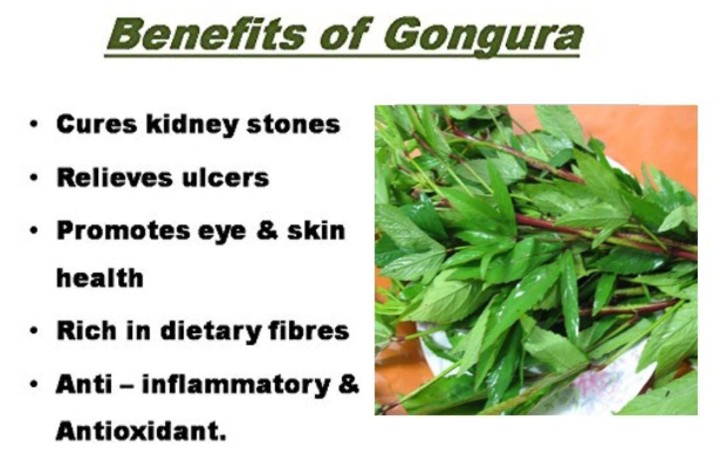
Gongura Health Benefits And Nutrition FactsGonguraGongura is a leafy vegetable that is mainly grown for medicinal purposes. It is an annual perennial woody based shrub that grows upto 1 meter. The leaves of the gongura have tart to sour flavor that can be incorporated into many dishes. It mainly comes in two categories, they are green stemmed and red stemmed gongura leaves. The plant gongura is native to Africa and India. But is most frequently used in the southern parts of India. Gongura is also known as sorrel leaves which is used for making large varieties of dishes like pachadi, pickle, chicken and pachadi to add to our dishes. It is an excellent source of vitamin A, vitamin B1, vitamin B2, calcium, potassium, phosphorus, magnesium, iron and vitamin B9. The carbohydrate, protein and fiber are the major components to benefit our health. The leaves of the gongura contain essential organic compounds like flavonoids, anthocyanins and polyphenolic acids.

Kidney stones (also called renal calculi, nephrolithiasis or urolithiasis) are hard deposits made of minerals and salts that form inside your kidneys.Diet, excess body weight, some medical conditions, and certain supplements and medications are among the many causes of kidney stones. Kidney stones can affect any part of your urinary tract — from your kidneys to your bladder. Often, stones form when the urine becomes concentrated, allowing minerals to crystallize and stick together..SymptomsKidney stones Enlarge imageA kidney stone usually will not cause symptoms until it moves around within the kidney or passes into one of the ureters. The ureters are the tubes that connect the kidneys and bladder.If a kidney stone becomes lodged in the ureters, it may block the flow of urine and cause the kidney to swell and the ureter to spasm, which can be very painful. At that point, you may experience these symptoms:Severe, sharp pain in the side and back, below the ribsPain that radiates to the lower abdomen and groinPain that comes in waves and fluctuates in intensityPain or burning sensation while urinatingOther signs and symptoms may include:Pink, red or brown urineCloudy or foul-smelling urineA persistent need to urinate, urinating more often than usual or urinating in small amountsNausea and vomitingFever and chills if an infection is presentPain caused by a kidney stone may change — for instance, shifting to a different location or increasing in intensity — as the stone moves through your urinary tract.your family has had kidney stones, you're more likely to develop stones, too. If you've already had one or more kidney stones, you're at increased risk of developing another.Dehydration. Not drinking enough water each day can increase your risk of kidney stones. People who live in warm, dry climates and those who sweat a lot may be at higher risk than others.Certain diets. Eating a diet that's high in protein, sodium (salt) and sugar may increase your risk of some types of kidney stones. This is especially true with a high-sodium diet. Too much salt in your diet increases the amount of calcium your kidneys must filter and significantly increases your risk of kidney stones.Obesity. High body mass index (BMI), large waist size and weight gain have been linked to an increased risk of kidney stones.Digestive diseases and surgery. Gastric bypass surgery, inflammatory bowel disease or chronic diarrhea can cause changes in the digestive process that affect your absorption of calcium and water, increasing the amounts of stone-forming substances in your urine.Other medical conditions such as renal tubular acidosis, cystinuria, hyperparathyroidism and repeated urinary tract infections also can increase your risk of kidney stones.Certain supplements and medications, such as vitamin C, dietary supplements, laxatives (when used excessively), calcium-based antacids, and certain medications used to treat migraines or depression, can increase your risk of kidney stones.Avoid processed and fast foods, canned soups and vegetables, and lunch meats. Look for foods labeled: sodium free, salt free, very low sodium, low sodium, reduced or less sodium, light in sodium, no salt added, unsalted, and lightly salted.